











HACCP is one of the most referenced but least understood certifications in the food industry. Here is what it actually means, what ISO 22000:2022 requires, and what "Category E" — the scope listed on Spicewale's certificate — actually covers.
What HACCP actually stands for
HACCP stands for Hazard Analysis and Critical Control Points. It is not a product test. It is a systematic methodology for identifying every point in a food production process where contamination, adulteration, or quality failure could occur — and building documented controls at each of those points to prevent it.
Spicewale holds HACCP Certificate No. UQ-2036111A10, issued by UK Global Certification & Inspection Limited in accordance with ISO 22000:2022 and ISO 19011:2011 standards. ISO 22000 is the international standard that defines how a HACCP-based food safety management system should be structured and audited. ISO 19011 is the standard that governs how the audit itself is conducted — ensuring the assessment process is rigorous and consistent. Our certificate was issued 09 June 2026 and is valid until 08 June 2029, subject to surveillance audits in 2027 and 2028.
What "Category E" means
Our certificate specifies Category E under the HACCP food category classification system. This categorization determines which specific hazard analysis requirements apply to our operation — covering retail and trading of spices, pulses, cereals, edible oil, and dairy products. This is the same scope that spans our entire catalog, from Bilona A2 Ghee to our full spice range to nuts and dry fruits.
How hazard analysis applies to a product like Jeera Star
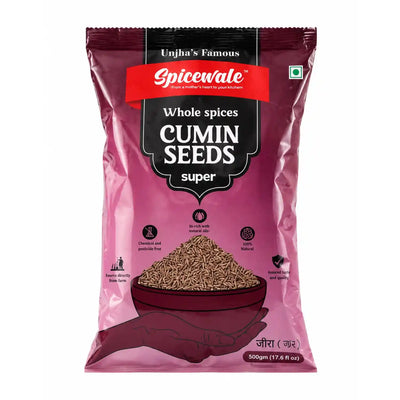
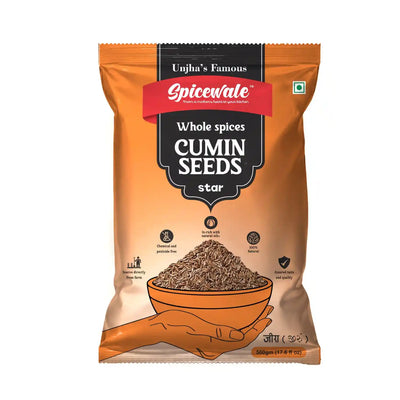
Take Jeera Star as a concrete example. A hazard analysis approach to whole cumin requires identifying every point where contamination could enter — at the point of harvest, during transport to the mandi, during storage before purchase, during our in-house cleaning process, and during final packing. At each of these points, a critical control point is established — a specific check or process step designed to catch and eliminate risk before it moves further down the chain.
This is fundamentally different from testing a finished product and hoping it passes. HACCP methodology assumes that testing the end product alone is insufficient — because by the time a problem shows up in finished goods testing, an entire batch may already be compromised. The system is designed to prevent the hazard from occurring at all, not just detect it after the fact.
What this means for our cleaning process
Our in-house cleaning line — the process that makes products like Chia Seeds and Flax Seeds "Double Sorted" — operates within this hazard-analysis framework. Stone removal, dust separation, and broken seed rejection are not arbitrary quality steps. Under a HACCP system, these become documented control points with defined acceptance criteria, not informal judgment calls made differently by different staff on different days.
The same discipline applies to our cold pressed oil production — covering Groundnut Oil, Coconut Oil, and Sesame Oil — where temperature control during pressing, filtration consistency, and bottling hygiene are all points where a hazard analysis approach requires specific, repeatable controls.
Why HACCP and GMP are not the same thing
GMP certification, which Spicewale also holds, focuses on overall facility quality systems — hygiene standards, staff training, and general manufacturing practice. HACCP is narrower and more specific — it focuses explicitly on food safety hazards and the control points designed to prevent them. A facility can theoretically have good general manufacturing practices without having formally mapped every hazard point in its specific product lines. Holding both certifications, alongside our FSSAI State License, means our facility has been independently assessed from multiple distinct angles — not just one.
What this means when you order from Spicewale
When you order Mamra Badam or Gond Katira from our full catalog, the product has moved through a documented system designed specifically to identify and control food safety risk at every stage — not just a brand promise that "we are careful." The certificate number is UQ-2036111A10. You are welcome to verify it directly with UK Global Certification & Inspection Limited.
Andar se saaf — mapped, documented, and independently audited.
0 comments