










Most D2C food brands in India operate from a corporate office, source through distributors, and never set foot in a primary agricultural market. Spicewale made a different choice. Here is why operating from inside Jodhpur's Mandore Mandi is a structural advantage that cannot be replicated from a warehouse.
What Mandore Mandi actually is
Mandore Mandi, alongside the adjacent Krishi Mandi, is one of Jodhpur's primary agricultural trading markets — where farmers, traders, and processors bring raw produce to be bought, sold, graded, and distributed across India. This is not a retail market. It is a wholesale trading hub where whole spices, seeds, pulses, and oil seeds change hands in bulk, often within hours of harvest or processing.
Spicewale operates from Shop No. 91, Shriram Nagar Market, Mandore Mandi, Krishi Mandi, Jodhpur — not as a tenant who occasionally visits, but as a permanent operation physically embedded in the market. Every certification we hold, including our FSSAI State License, GMP, and HACCP certificates, lists this exact address.
The advantage most brands cannot replicate
When a brand sources through a distributor or intermediary, they are buying based on a description, a sample, or a trust relationship several steps removed from the original harvest. They do not see the full lot. They do not know what was rejected before the sample reached them. They are making a purchasing decision based on incomplete information.
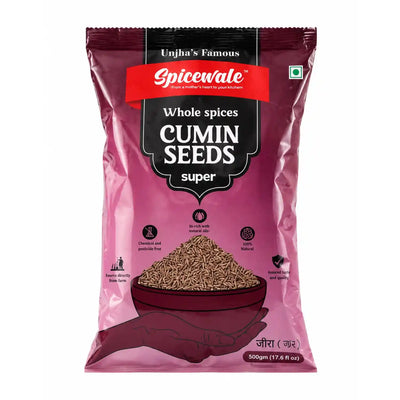
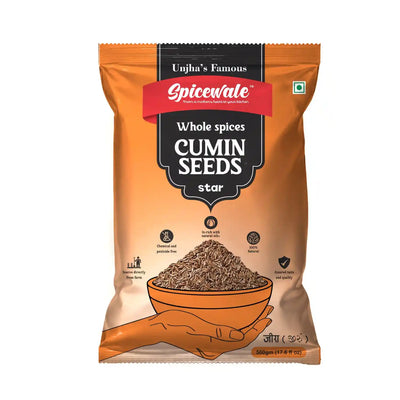
Being inside Mandore Mandi means Spicewale sees raw material before it is sorted into samples for distribution elsewhere. When a new lot of cumin arrives — the raw material for our Jeera Star — we can examine the full lot, not a curated sample. When fennel season peaks and quality is at its annual best, we are sourcing at that exact moment for our Fennel Seeds and Barik Lakhnowi Saunf. When a batch of groundnuts shows lower oil content than our standard requires, we simply do not buy it — there is no intermediary layer obscuring that decision.
What this means for grade-specific products
Several of Spicewale's products exist specifically because of this market-level visibility. Cashew W320 is a specific international trade grade — sourcing it accurately requires examining cashews at the point of grading, not trusting a label further down the supply chain. Mamra Badam requires visual verification of the wrinkled texture that distinguishes it from California almonds — a distinction that is easy to substitute away from if you are not looking at the actual product before purchase.
The same applies to our seeds range. Chia Seeds, Flax Seeds, and Basil Seeds all arrive at our facility as raw bulk material — examined, then cleaned in-house through our Double Sorted process, not pre-cleaned by an unknown third party before it reaches us.
Jodhpur's specific advantage in the spice trade
Jodhpur and the surrounding region of Rajasthan is one of India's largest cumin and fennel producing and trading areas. This is not incidental to Spicewale's location — it is the reason our spice range, including our complete spice collection, can be sourced at primary market quality and price. A brand based in Mumbai or Delhi sourcing the same cumin is, by definition, buying from someone who already bought it from a market like Mandore Mandi — adding a markup and a layer of distance between the brand and the original quality decision.
Why we are not moving to a corporate office
As Spicewale grows, the easy decision would be to relocate to a city office, hire a procurement team, and source through established distributor relationships — the standard playbook for D2C food brands. We have chosen not to. The mandi is not a romantic backdrop for our brand story. It is the operational reason we can credibly claim grade-specific sourcing across products like Cold Pressed Groundnut Oil and Gond Katira — and the reason we intend to stay exactly where we are.
Andar se saaf — starting at the source, not after it.
0 comments